
The global marketplace is undergoing a profound structural transformation. The traditional pillars of commerce are no longer operating in isolation; instead, they are being dismantled and reassembled by a wave of technological acceleration, shifting macroeconomic priorities, and urgent environmental realities. Businesses can no longer rely purely on historical models to predict consumer demand or operational viability. True long-term success requires a proactive understanding of the frontier markets that are redrawing the competitive landscape.
The companies dominating the next decade will not merely be those that adapt to existing trends, but those that anchor themselves within entirely new industrial ecosystems. From the integration of cognitive automation across global supply chains to the foundational restructuring of global energy systems, emerging industries are shifting from experimental niches into primary economic engines. Examining these sectors reveals the precise mechanics of how tomorrow’s corporate landscape will function.
The Autonomous Enterprise and Next-Generation Automation
Artificial intelligence has evolved past the phase of speculative experimentation or simple consumer-facing chat applications. Today, it functions as the structural foundation for the autonomous enterprise, creating an industrial layer that redefines productivity across every corporate vertical.
The Rise of Specialized AI Capabilities and Agents
The modern technology ecosystem has shifted from treating artificial intelligence as a standalone software product to treating it as a core operational capability. Businesses are rapidly moving away from general-purpose foundation models in favor of domain-specific AI agents.
These highly specialized software systems are capable of executing complex, multi-step workflows without constant human oversight. In fields like logistics, legal analysis, and corporate compliance, these agents analyze massive streams of first-party data in real time to optimize dispatch routes, audit contracts, and flag regulatory anomalies. This shift lowers operational overhead while simultaneously accelerating corporate decision-making speeds.
Fleet Management and Robotic Process Orchestration
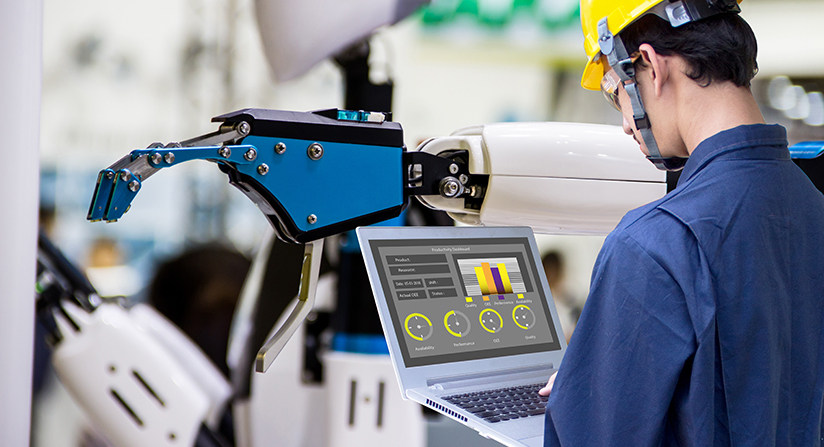
Robotics and automation are expanding rapidly outside of traditional, heavy industrial manufacturing environments. Mid-market corporations now have access to collaborative robots and flexible automated machinery engineered for non-industrial spaces, such as commercial kitchens, retail warehouses, and healthcare facilities.
The primary business challenge has consequently shifted from mechanical engineering to software orchestration. An emerging sub-industry has formed around robotic fleet management systems and middleware platforms that seamlessly integrate hardware assets with existing corporate Enterprise Resource Planning software. This allows companies to synchronize physical robot movements with digital inventory records, establishing an uncompressed feedback loop between digital supply chains and physical operations.
The Clean Energy Infrastructure and Grid Modernization
The global push toward total decarbonization has transformed climate sustainability from a corporate social responsibility metric into a massive, capital-intensive infrastructure industry. Achieving aggressive climate targets requires a fundamental overhaul of how electricity is generated, stored, and distributed.
Everything-to-Grid Decarbonization Networks
The inherent limitation of primary renewable energy sources, such as solar and wind power, is their intermittent nature; energy generation frequently ebbs precisely when consumer demand peaks. The emerging industry of everything-to-grid technology resolves this structural bottleneck.
This framework utilizes sophisticated software platforms to link distributed energy assets, including electric vehicles, corporate data center battery backups, and residential solar systems, into a unified, responsive network. During peak load periods, these platforms draw idle, stored electricity from these micro-assets back into the main grid, matching demand fluctuations instantly without relying on carbon-heavy peaker plants. This decentralized infrastructure turns passive energy consumers into active, revenue-generating grid participants.
Alternative Sourcing Technologies for Critical Minerals
The rapid adoption of electric mobility and grid-scale battery storage has created a severe supply chain dependency on rare earth elements and lithium. Traditional mineral extraction methods are slow, water-intensive, and geographically concentrated.
To mitigate this strategic vulnerability, the direct lithium extraction industry is scaling rapidly. By deploying highly engineered chemical systems, including advanced sorbents and specialized membranes, companies can extract high-purity lithium from geothermal fluids and industrial wastewater within hours rather than years. This technological leap diversifies manufacturing supply chains while minimizing the environmental disruption historically associated with open-pit mining operations.
The Evolution of Precision Biotech and Digital Health Tech
Demographic realities, particularly aging populations in major global economies, are straining traditional healthcare delivery models. The intersection of genomic science, advanced diagnostics, and decentralized software platforms has birthed a highly resilient healthcare technology sector.
Personalized Therapeutics and Advanced Genomics
The medical field is transitioning away from uniform, population-wide pharmaceutical models toward highly precise, individual-specific therapies. Driven by rapid cost reductions in DNA sequencing and the implementation of machine learning for molecular modeling, the personalized medicine sector is fundamentally altering patient care.
Biotechnology firms can now analyze an individual’s unique genetic architecture to predict exact drug efficacy scores and design tailored oncology treatments. This approach shortens clinical trial timelines, reduces adverse drug reactions, and creates highly defensible intellectual property portfolios for life science corporations.
Remote Patient Monitoring and Decentralized Care
The physical hospital room is being decentralized by digital health platforms that leverage internet-of-things medical devices and secure cloud infrastructure. The emerging remote patient monitoring sector allows healthcare providers to continuously track vital signs, glucose levels, and cardiac performance from a patient’s home.
By feeding this continuous stream of physiological data into predictive analytics engines, medical teams can intervene proactively before a chronic condition escalates into an emergency room admission. This shift significantly lowers operational healthcare expenditures while creating predictable, software-as-a-service subscription revenue models for digital health operators.
Advanced Cyber Defense and Autonomous Threat Mitigation
As modern enterprises digitize their operations, transition to multi-cloud environments, and deploy distributed workforces, their total digital vulnerability surface expands exponentially. Cybersecurity has shifted from an internal information technology line-item into a non-negotiable component of corporate governance.
Defending Against Automated Exploitation Vectors
Bad actors are increasingly leveraging generative software tools to launch highly sophisticated, hyper-personalized social engineering and phishing campaigns at massive scale. Traditional signature-based security firewalls are incapable of detecting these dynamic, never-before-seen threat variants.
The emerging cybersecurity paradigm relies heavily on autonomous threat mitigation platforms. These systems utilize continuous behavioral analytics to establish a baseline of normal user activity inside a corporate network. The moment an anomalous behavior occurs, such as an unauthorized database access request executed at an unusual hour, the security platform instantly isolates the compromised credential and remediates the threat without requiring human intervention.
Application-Level Security Implementation
With business applications handling highly sensitive customer profiles and financial transactions, security can no longer be treated as an afterthought or an external layer applied post-development.
The software sector is experiencing high demand for secure development lifecycle implementation services. This approach embeds security auditing directly into the initial coding phase of software development, utilizing automated testing pipelines to catch vulnerabilities before code is deployed to production. Organizations that prioritize this structural security model drastically reduce their exposure to devastating data breaches and regulatory fines.
Tactical Frameworks for Capitalizing on Emerging Markets
Navigating an economy defined by rapid structural disruption requires corporate leaders to think critically about resource allocation and organizational agility.
-
Prioritize Vertical Integration Over Horizontal Expansion: When entering a high-growth emerging industry, businesses should focus on dominating a highly specific vertical problem rather than building a broad, generalized utility tool. Solving a definitive, high-friction pain point establishes immediate pricing power.
-
Establish First-Party Data Dominance: Because modern industrial sectors rely heavily on algorithmic optimization, the company that controls the cleanest, most exclusive first-party data pipeline will inevitably build the most accurate predictive models, compounding its competitive advantage over time.
-
Build Regulatory and Compliance Adaptability: Emerging industries almost always outpace existing legal frameworks. Organizations must construct flexible internal compliance structures capable of rapidly adapting to new privacy mandates, carbon accounting standards, or autonomous device regulations.
Frequently Asked Questions
What constitutes the primary difference between a short-term market trend and a true emerging industry?
A short-term market trend is typically driven by speculative consumer hype, temporary behavioral shifts, or surface-level marketing changes that do not alter foundational economic structures. A true emerging industry is characterized by systemic technological breakthroughs, heavy capital investments in physical or digital infrastructure, long-term regulatory frameworks, and the creation of entirely new business models that fundamentally solve core structural inefficiencies.
How should non-technical legacy enterprises begin preparing for the rise of autonomous AI agents?
Legacy enterprises should begin by executing a thorough internal audit of their proprietary data architectures. Autonomous AI agents cannot function effectively if corporate data is trapped in disorganized, siloed legacy databases. Organizations must prioritize data cleaning, cloud migration, and the establishment of secure application programming interfaces, ensuring that internal information is accessible and readable for cognitive automation platforms.
Why is the circular economy and waste management sector considered a high-growth business opportunity?
The waste management and circular economy sector is growing rapidly due to a combination of tightening environmental regulations, rising raw material costs, and consumer demands for corporate sustainability. Businesses that can innovate in eco-friendly packaging, electronic waste recycling, or industrial byproduct upcycling help manufacturing companies secure predictable material inputs while shielding them from carbon taxes and supply chain volatility.
How does space exploration technology generate immediate practical value for mainstream commercial businesses?
While deep space exploration captures public attention, the immediate commercial value lies in low-Earth orbit infrastructure and Spacetech. The proliferation of private satellite constellations has created a booming market for high-resolution geospatial imagery, real-time climate monitoring data, and global telecommunications connectivity. Agriculture, logistics, maritime shipping, and insurance corporations use this space-based data to track asset movements, predict crop yields, and assess environmental risks accurately.
What is AgTech and how does it address global food security challenges?
AgTech, or agricultural technology, is an emerging field that applies robotics, IoT sensors, and data analytics to traditional farming operations. By deploying automated drones for precision pesticide application, utilizing soil sensors to optimize irrigation schedules, and building vertical indoor farming facilities, AgTech allows farming operations to drastically increase crop yields while using significantly less water, land, and chemical fertilizer.
How do changes in global privacy regulations impact the growth trajectory of the digital marketing data industry?
Tightening privacy regulations and the elimination of traditional third-party tracking mechanisms have crippled old digital advertising models that relied on cross-site surveillance. This shift has fueled the rapid growth of a new digital marketing data industry centered around clean rooms, first-party data collection tools, and contextual analytics software. Businesses that help brands legally and transparently gather and analyze customer data directly are seeing massive demand.