
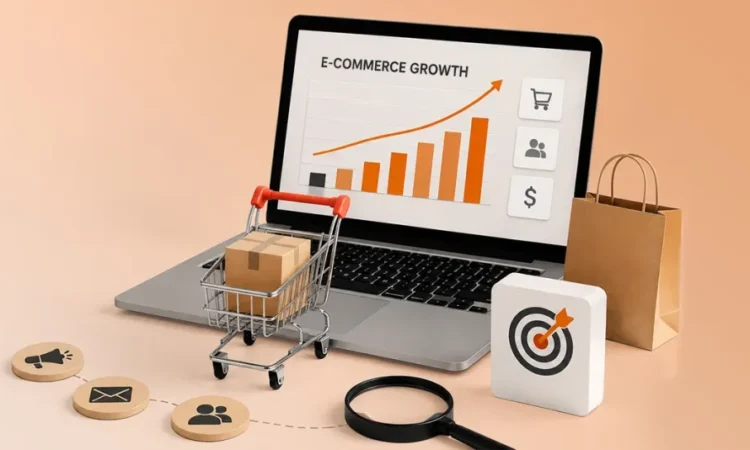
The e-commerce landscape has transitioned from a space of rapid, unchecked acquisition to an era that demands structural stability and long-term viability. Launching an online store or scaling digital sales is no longer just about driving immediate traffic through expensive paid advertisements. Sustainable business growth requires a holistic approach that balances customer acquisition with high retention, supply chain efficiency, data integrity, and technological adaptability.
True sustainability in e-commerce means building an enterprise capable of generating consistent profit margins while weathering macroeconomic shifts, changing consumer behaviors, and rising advertising costs. To achieve this, digital brands must implement foundational strategies that move away from short-term hacks and focus instead on building enduring asset value.
Optimizing the Digital Storefront for Frictionless Conversions
The foundational component of any e-commerce enterprise is the user experience on the digital storefront. A website that frustrates users or complicates the purchasing process will inevitably waste marketing dollars, regardless of how superior the underlying product may be.
Prioritizing Mobile Commerce Architecture
A massive percentage of global e-commerce traffic originates from mobile devices. Sustainable growth requires a mobile-first design philosophy rather than treating mobile responsiveness as a secondary adaptation of a desktop site.
This means implementing clean layouts, thumb-friendly navigation menus, and lightweight visual assets that ensure rapid page load speeds. A delay of even a single second in mobile loading times can drastically reduce conversion rates, directly impairing marketing efficiency and wasting capital.
Simplifying the Checkout Infrastructure
The checkout phase is where the highest volume of high-intent cart abandonment occurs. To secure sustainable growth, businesses must strip away all unnecessary friction from this process.
This includes offering guest checkout options so users are not forced to create a time-consuming account just to make a single purchase. Furthermore, integrating modern, secure payment gateways that support digital wallets simplifies the transaction process down to a few taps. Reducing the fields a user must fill out and clearly displaying all shipping fees, taxes, and delivery windows upfront eliminates the late-stage cognitive friction that kills conversions.
Building a Data-Driven Retention Engine
Relying solely on net-new customer acquisition is a financially unsustainable model for long-term growth. As digital advertising networks become increasingly saturated, Customer Acquisition Costs continue to climb. The modern path to profitability lies in maximizing the lifetime value of every individual who makes an initial purchase.
Designing High-Yield Lifecycle Email and SMS Marketing
Email and short message service marketing remain some of the highest-return channels available to e-commerce operators because they utilize owned media rather than rented ad space.
Instead of blasting a generic weekly newsletter to an entire list, sustainable growth models utilize behavioral segmentation. Automated flows should be triggered based on specific user actions, such as browsing a particular category, abandoning a cart, or reaching the typical reorder window for a consumable item. Delivering highly relevant, personalized messaging at the exact moment a consumer is primed to interact keeps the brand top-of-mind without causing promotional fatigue.
Implementing Value-Driven Loyalty Programs
A successful retention strategy actively rewards repeating behaviors. Modern loyalty structures should move beyond simple points-for-purchase systems, which can sometimes dilute profit margins over time.
Instead, businesses should look toward experiential rewards, early access to new product drops, or tiered benefits that incentivize customers to climb higher in status. When customers feel a sense of community or receive tangible, personalized utility from a brand loyalty program, their switching costs increase, creating a reliable competitive moat around the customer base.
Supply Chain Resilience and Logistics Excellence
An e-commerce business is ultimately only as good as its fulfillment operation. A brilliant marketing campaign and a beautiful website cannot overcome delayed shipments, damaged goods, or persistent out-of-stock messages.
Diversifying Supplier Networks
Relying on a single manufacturing source or a single geographic region for inventory creates immense operational vulnerability. Disruptions caused by geopolitical shifts, severe weather, or economic instability can halt supply chains overnight, starving a business of cash flow.
Sustainable e-commerce models build redundancy into their sourcing. By maintaining relationships with secondary suppliers or utilizing a mix of domestic and international manufacturing partners, brands ensure they can maintain adequate stock levels even when their primary supply line experiences unexpected bottlenecks.
Deploying Intelligent Inventory Management Systems
Holding excess inventory ties up critical working capital and introduces the financial risk of dead stock that must eventually be liquidated at a loss. Conversely, under-stocking leads to backorders and alienates customers.
Implementing advanced inventory management software that integrates directly with sales channels allows businesses to monitor stock levels in real time. These systems utilize historical sales data, seasonal trends, and lead times to calculate precise reorder points. This predictive approach keeps inventory lean and capital fluid, allowing resources to be deployed into growth initiatives rather than sitting idly on warehouse shelves.
Enhancing Profitability Through Organic Acquisition
Paid digital advertising remains a powerful tool for scaling, but a brand that is entirely dependent on paid ad clicks for survival is inherently fragile. Sustainable growth requires a diversified traffic mix heavily anchored by organic channels.
Structural Search Engine Optimization
Search engine optimization is a long-term investment that builds a compounding asset over time. Unlike paid ads, which stop generating traffic the moment the budget is paused, high organic search rankings deliver consistent, intent-driven traffic indefinitely.
This strategy involves optimizing product descriptions with highly relevant search terms, maintaining a clean URL architecture, and ensuring all product images contain descriptive alt text. Additionally, creating comprehensive, informational category pages helps search engines understand the contextual relevance of the online store, elevating its authority within its market niche.
Editorial Content Marketing and Problem-Solving Assets
Modern consumers search the web for solutions to their problems long before they decide to buy a specific product. E-commerce brands can capture this top-of-funnel traffic by creating editorial content that genuinely educates or entertains their target audience.
For example, a brand selling specialized cookware can publish detailed guides on culinary techniques, knife maintenance, and ingredient selection. This educational approach builds immediate authority, introduces the brand in a non-promotional context, and guides high-quality organic traffic directly into the product ecosystem.
Systematically Managing the Financial Infrastructure
True sustainability is found in the numbers. Many high-revenue e-commerce brands fail because their leadership focuses entirely on top-line sales while ignoring the underlying erosion of gross margins.
-
Audit Product Contribution Margins: Every product in an e-commerce catalog must be evaluated based on its individual contribution margin after accounting for manufacturing costs, picking, packing, shipping, and ad spend. High-volume items with thin margins can easily drain cash flow if they are not balanced by high-margin offerings.
-
Establish a Proactive Returns Management Protocol: Product returns are a significant logistical and financial burden in online retail. Sustainable brands actively work to reduce return rates by providing ultra-detailed size charts, high-definition product videos, and explicit descriptions that align consumer expectations with reality.
-
Optimize Pricing Architecture Dynamically: Static pricing models can quickly fall out of sync with rising material costs or shifting competitor landscapes. Utilizing data-driven pricing models allows a business to adjust prices incrementally to protect margins while remaining attractive to value-conscious shoppers.
Frequently Asked Questions
How can an e-commerce brand accurately calculate its true customer acquisition cost?
Calculating the true acquisition cost requires aggregating every single dollar spent on marketing over a specific period, including ad spend, agency fees, creative production costs, and marketing tool subscriptions, and then dividing that total by the exact number of new customers acquired during that identical timeframe. Looking strictly at the ad platform dashboard metrics often results in an incomplete and overly optimistic assessment of acquisition efficiency.
What is the most effective approach for handling rising shipping costs without losing sales?
The most reliable method is to implement a strategic free shipping threshold that sits slightly above the current average order value. This structure encourages consumers to add an extra item to their cart to qualify for free delivery, effectively increasing the transaction value enough to absorb the logistical cost. Alternatively, businesses can blend a portion of the average shipping cost directly into the base product price, allowing them to present lower, flat-rate shipping fees at checkout.
When should an online retailer transition from a third-party marketplace to an independent website?
A brand should ideally operate both channels simultaneously rather than viewing them as mutually exclusive options. Third-party marketplaces are excellent for broad discovery, clearing excess inventory, and initial validation. However, the transition toward prioritizing an independent website should occur as soon as the brand requires deeper control over the end-to-end customer experience, access to first-party customer data for retargeting, and freedom from high marketplace transaction fees.
How does international expansion fit into a sustainable e-commerce growth plan?
International expansion should only be pursued once a brand has completely stabilized its domestic logistics, unit economics, and customer retention metrics. Entering international markets requires significant capital to handle localized currency checkout, international tax compliance, and cross-border shipping networks. Prematurely expanding internationally before establishing a profitable domestic core can easily overextend a company’s operational capacity and drain its capital reserves.
What strategies can a brand use to mitigate the negative impact of cart abandonment?
Beyond simplifying the checkout flow, the most effective tool is a multi-step abandoned cart recovery sequence. This begins with an automated email sent within one hour of abandonment reminding the user of the items left behind. If they do not convert, a second communication can be sent twenty-four hours later highlighting social proof, customer reviews, or clear answers to common product questions. Incentives or discounts should be reserved for the final step of the flow to protect profit margins.
Why is reliance on third-party tracking data a major risk for sustainable digital growth?
Privacy updates across modern operating systems and browser networks have severely degraded the accuracy of third-party tracking pixels used by advertising networks. Brands that rely entirely on these pixels for optimization frequently misallocate their ad spend based on flawed attribution models. Achieving sustainable growth requires building internal first-party data collection systems, tracking overall blending marketing efficiency ratios, and prioritizing direct consumer relationships.